


A simple definition
A surrogate model is an AI that learns from simulation. Its role is to help engineers find the best manufacturing settings.
An example: a hot-forged connecting rod
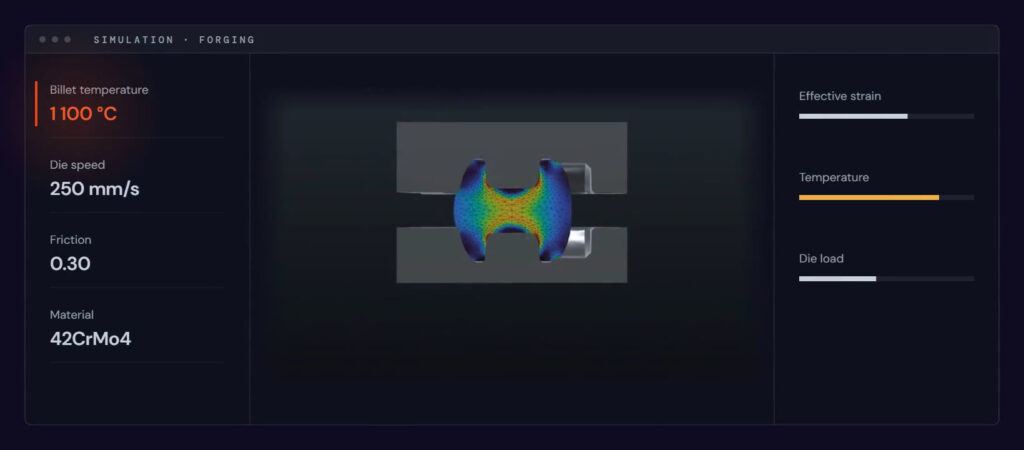
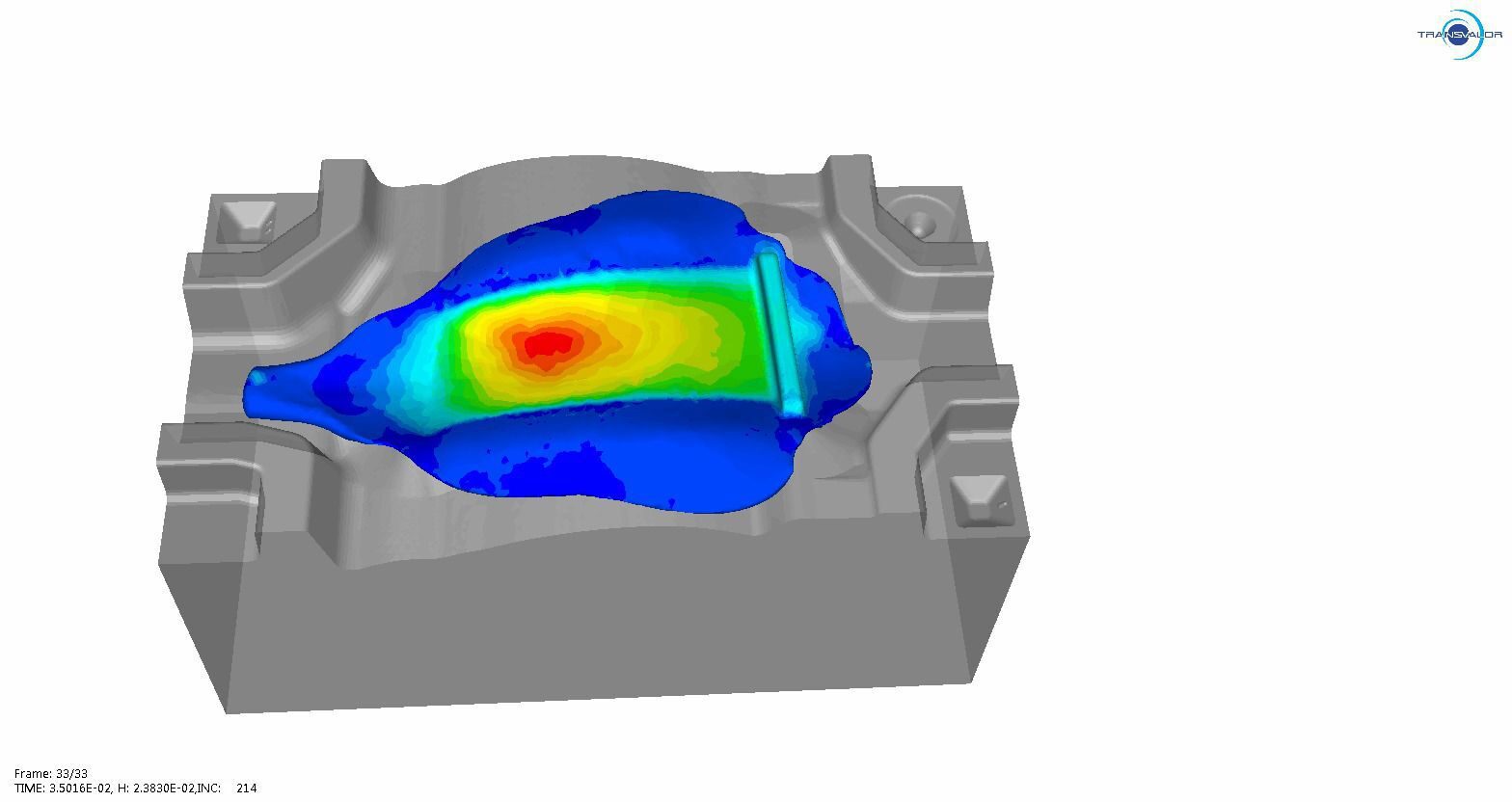
Take a connecting rod, hot-forged under a press. Temperature, speed, tool shape: thousands of settings are possible. Only a few give a good part. The others end up as scrap, which means lost material, energy and money.
How it works
- Simulation computes what each setting produces.
- The surrogate model trains on many of these calculations.
- It then estimates, almost instantly, the result of a new setting.
This accelerates standard engineering workflows, such as process design and optimization, and also enables a wider exploration of the parameter space. In a way, engineers can afford to be more creative.
The true game-changer is that instant responses open the door to new uses. One outstanding example is production control: handling the online input data from machinery, surrogates can detect issues before they occur and offer an opportunity to act. All this grounded in the physics it has learned.
Two families of surrogate models
Not all surrogate models do the same job. At PHYSORA, we develop two families.
Surrogate QoI: the AI predicts the value that matters
QoI stands for “Quantity of Interest”: the quantity the engineer cares about, such as a dimension, a force or a quality indicator. Will this tube be round enough? Will this sheet be flat enough? The AI answers directly.
Surrogate Solver: the AI predicts the full result
It reproduces the complete simulation result, at every point of the part. In time, this will make it possible to follow production on screen, on a virtual copy of the line, known as a digital twin.
Where we start
Our first fields of application are metal forming, fatigue and wear of parts.
One rule
Two families, one rule: the AI learns from simulation. It does not replace it. Physics leads. AI accelerates.