


Keywords: 7XXX aluminum alloys, nanoscale precipitates, precipitation kinetics, yield strength, mean-field model, machine learning, neural network, surrogate, hybrid modelling, finite elements, heat treatment, Forge, aerospace structures, quenching, stress relieving, artificial aging.
Introduction
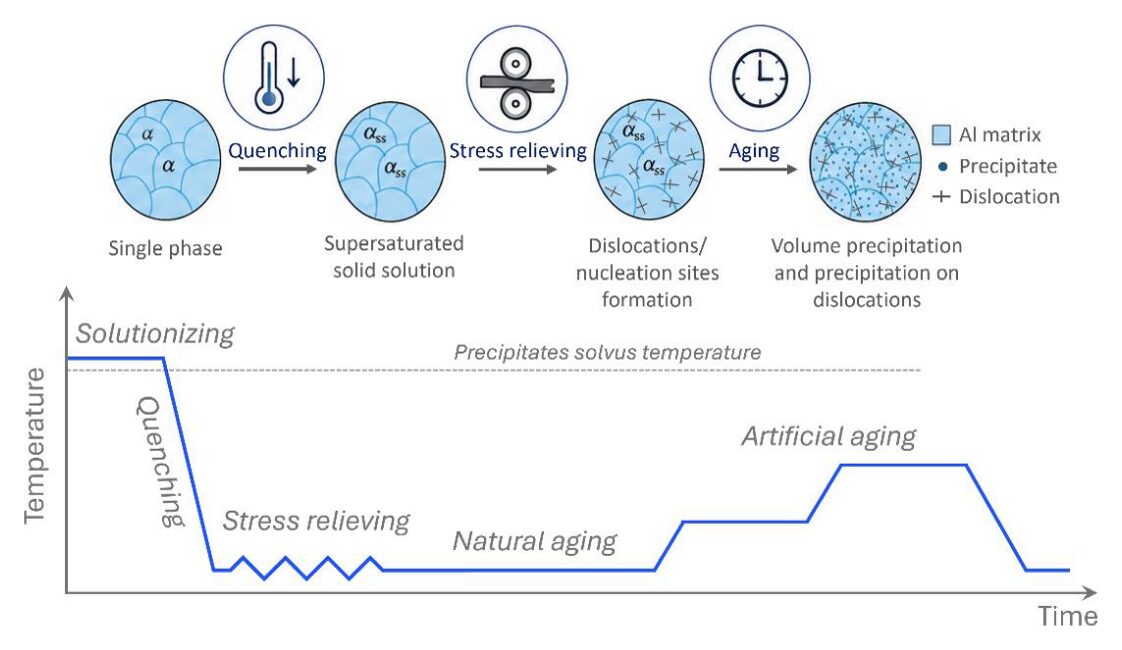
7XXX series aluminum alloys are widely used in aerospace structures because of their exceptional strength-to-weight ratio1,2. Their mechanical performance depends not only on their chemical composition but also on the fine dispersion of nanoscale precipitates formed during thermomechanical processing3,4. The size, volume fraction and chemical composition of these precipitates evolve throughout the entire heat treatment cycle and ultimately govern the yield strength of the material5 (see Figure 1). Predicting the mechanical properties of industrial components therefore requires a quantitative description of precipitation kinetics across a broad range of alloy compositions and processing conditions, which remains a significant challenge.
Physics-based models can reliably describe the evolution of the precipitate population and its contribution to strengthening6, but their computational cost limits their direct application to large industrial components. Conversely, machine learning (ML) models can provide predictions at low computational cost, but their reliability depends on the availability of sufficiently large and representative datasets7. Generating such datasets experimentally across the full compositional and processing space is both costly and time-consuming.
To overcome these limitations, we developed a hybrid modelling framework (see Figure 2), that combines experimental characterization, a non-stoichiometric mean-field precipitation model and a neural-network surrogate8. Experimental measurements are first used to develop a physical model, which is subsequently employed to generate a large simulated database spanning a wide range of alloy compositions and thermomechanical conditions. A neural network is then trained on these simulations to reproduce the predictions of the physical model at a fraction of its computational cost. Finally, the trained surrogate is integrated into our finite element solution FORGE® to predict the spatial distribution of yield strength in an industrial component subjected to quenching, stress relieving and artificial aging.
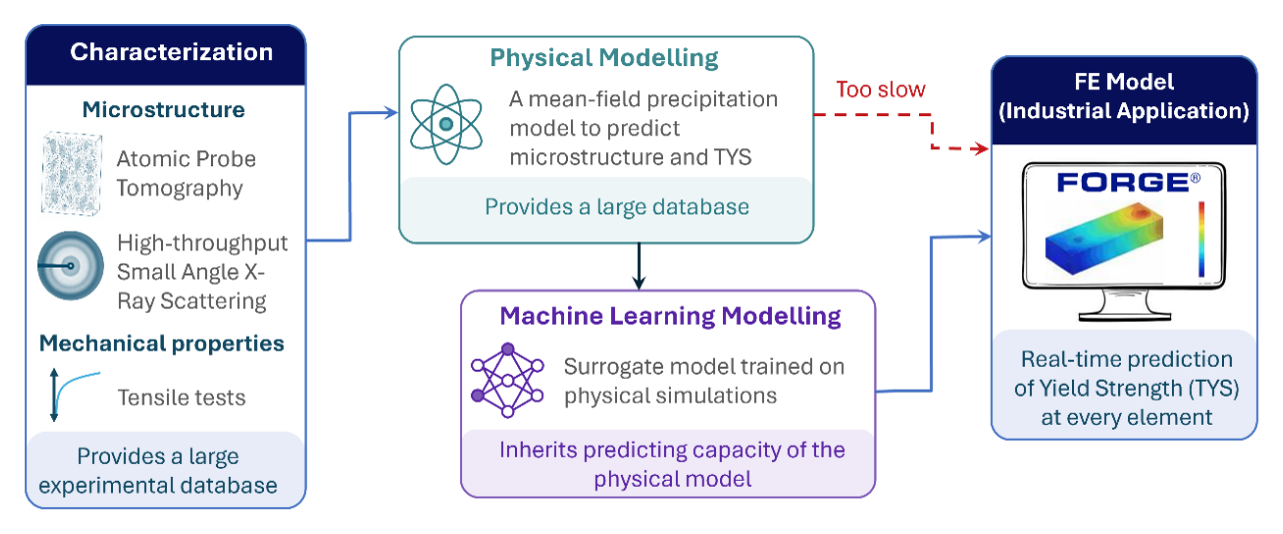
1. Experimental database
The development of a predictive precipitation model requires experimental information on the evolution of the precipitate population and its chemical composition during artificial aging. To this end, small-angle X-ray scattering (SAXS) and atom probe tomography (APT) experiments were realized at the SIMAP laboratory to characterize 7xxx aluminum alloys subjected to different thermomechanical conditions.
High-throughput SAXS measurements were performed on graded specimens to investigate effects of quenching rate, plastic strain and composition on precipitation. The resulting scattering profiles were then treated to determine the precipitate radius distribution from which two important quantities can be extracted: the volume-weighted radius Rv and the mean-square electron-density fluctuation η2, which depends on the precipitate volume fraction fv and the precipitate/matrix composition9.
APT measurements provided further insight into the chemical evolution of precipitates during aging (see Figure 3). As aging progresses, the Zn, Mg, and Cu concentrations approach their equilibrium values, although equilibrium is not reached at the end of the second aging plateau. For instance, the Mg content reaches approximately 30 at%, below the equilibrium value of 33 at% predicted by Thermo-Calc10. APT measurements also reveal a pronounced dependence of precipitate composition on particle size, particularly for Cu whose content is approximately an order of magnitude lower in the largest precipitates than in the smallest ones. Zn exhibits the opposite trend, with larger precipitates being comparatively enriched in Zn.
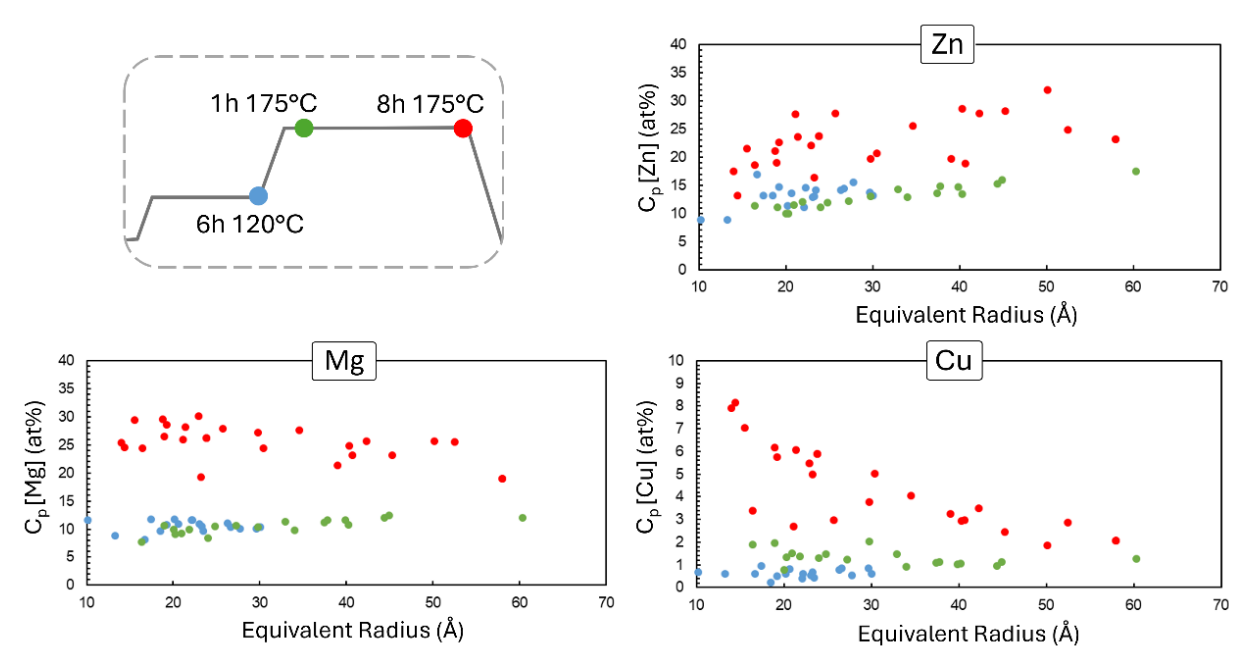
The experimental results provide quantitative measurements of precipitate size and volume fraction, as well as compositional information on the evolution of the precipitate and matrix phases. The observed changes in composition with aging time and particle size show that a fixed stoichiometry is insufficient to describe precipitation and motivate the non-stoichiometric model introduced in the following section.
2. Physical model
A non-stoichiometric mean-field model was developed to describe precipitate growth and coarsening while accounting for the pre-deformation step in the thermomechanical route. In this model, nucleation is not treated explicitly. Instead, the simulation begins with an initial precipitate size distribution at the beginning of the first aging plateau based on SAXS measurements, and the subsequent evolution of the precipitate population is described within a closed precipitate/matrix system.
Two limiting compositions are defined: a Zn-rich precipitate P1 = Mg0.33 Zn0.50 Al0.17 and a Cu-rich precipitate P2 = Mg0.33 Al0.37 Cu0.30, which represents the experimentally observed progressive substitution of Zn by Cu within the precipitates. The composition of the actual precipitate Xi is expressed as a linear combination of these two limiting compositions with a variable χ varying between 0 and 1, such that:
Xi = χ P1 + (1 − χ) P2
Xi = Mg0.33 Zn0.5χ Al0.17χ + 0.37(1 − χ) Cu(1 − χ)0.3
The composition parameter χ is determined by imposing local thermodynamic equilibrium at the precipitate/matrix interface for the two limiting stoichiometric precipitate compositions. The equilibrium relations account for the interaction between the two precipitate components, temperature, and the Gibbs-Thomson effect associated with interfacial energy and precipitate radius. These relations are coupled with interfacial mass balances that account for solute diffusion in the matrix, precipitate growth or dissolution, and changes in precipitate composition. Solving this coupled system determines the evolution of precipitate size and composition during aging, providing the microstructural information required to calculate yield strength.
The model was then calibrated against experimental data obtained for a 7010 alloy containing 2.7 at% Zn, 2.8 at% Mg and 0.7 at% Cu in the T74 condition, without pre-deformation. The simulated yield strength and precipitate’s volume-weighted radius reproduce the same trend as the experimental evolution throughout aging (Figure 4(a,b)). However, a discrepancy is observed in the predicted precipitate/matrix composition and the mean-square electron-density fluctuation with regards to the APT and SAXS results (Figure 4(c,d)). This discrepancy may arise from the equilibrium-based thermodynamic data used as input to the model. Such data provide equilibrium precipitate compositions but do not capture their time-dependent evolution during aging. Consequently, the model may not fully reproduce the experimentally observed precipitate compositions, particularly their Cu and Zn contents.
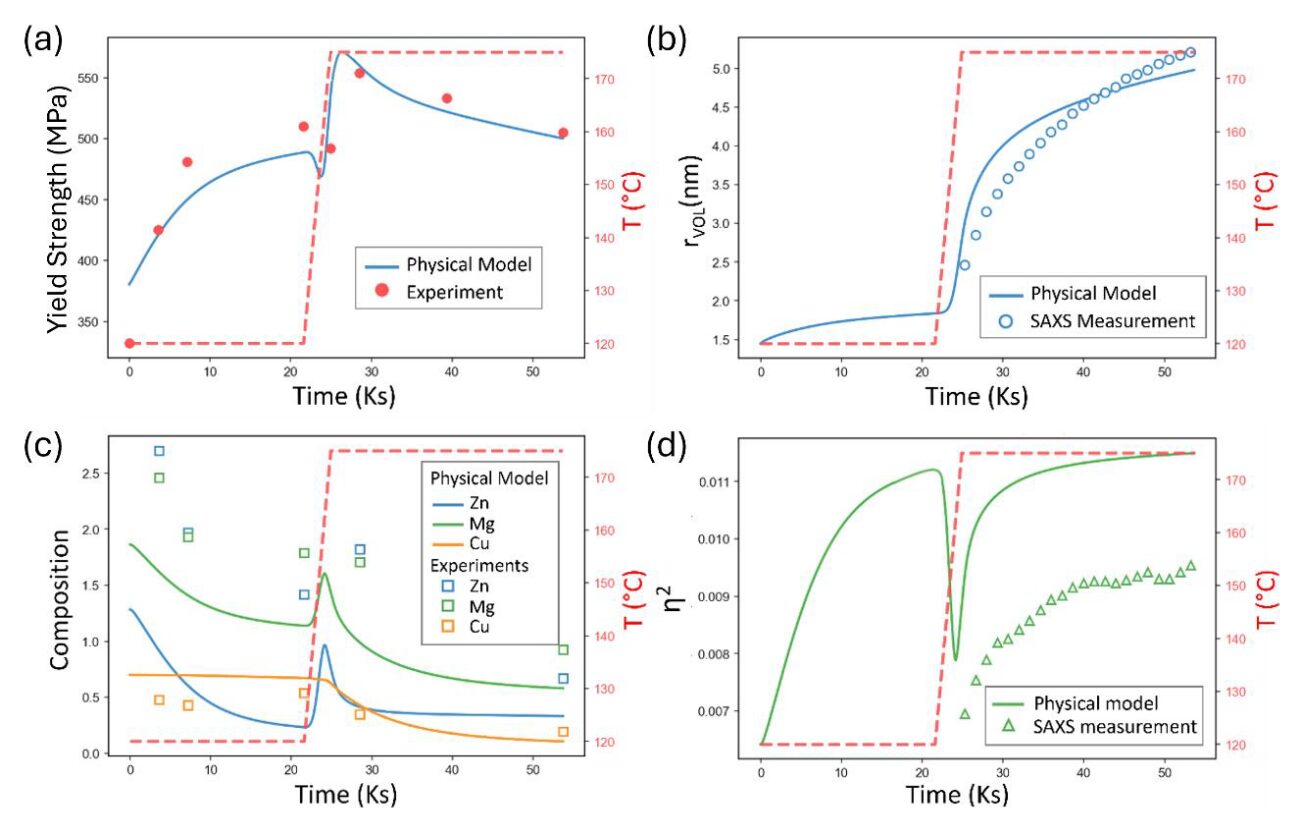
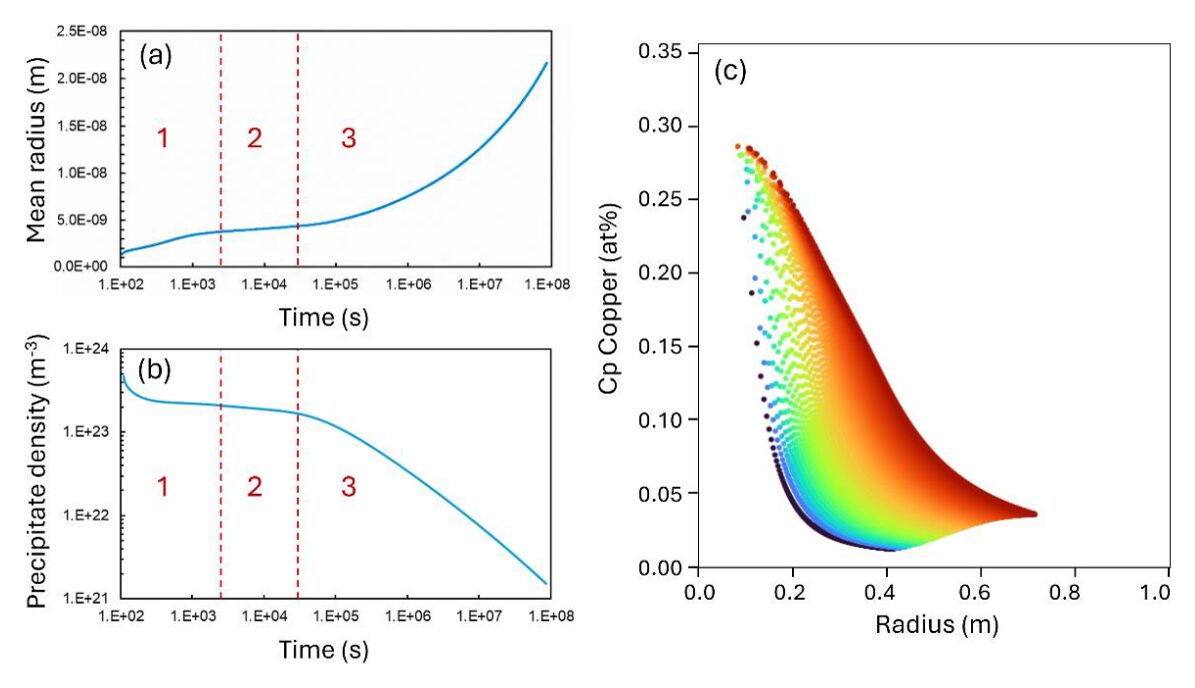
Despite these deviations, the model captures the main trends observed experimentally, in particular progressive copper enrichment. During the second aging plateau at 175 °C, the predicted precipitate radius and number density reveal three successive regimes (see Figure 5(a, b)). The first is characterized by rapid precipitate growth governed by Zn with limited Cu enrichment. During the second regime, growth continues at a lower rate and is now governed by Cu that progressively accumulates in the precipitates. The precipitate number density remains approximately constant, and the concentrations remain away from their equilibrium value. The final regime is characterized by coarsening, with a decrease in precipitate number density and progressive evolution of the matrix and precipitate compositions towards equilibrium.
The simulation also reproduces the variation in Cu content with precipitate size during aging (see Figure 5(c)), with smaller precipitates accumulating more Cu than larger ones, which is consistent with APT observations. Nevertheless, Cu enrichment occurs across the entire precipitate population, including the larger precipitates, although to a lesser extent.
3. Simulated database for surrogate model training
The computational cost of the physical model limits its direct application to large finite element simulations. Computing a single material point takes approximately two to five minutes. Since an industrial component may contain several hundred thousand finite elements, applying the physical model at every element would require computational times exceeding one year. A neural-network surrogate was therefore developed to reproduce the physical-model predictions at substantially lower computational cost.
The simulated database was generated by sweeping the compositional and processing parameter space using the calibrated physical model.
It is noted that the quenching step computation is not included in the model. It is treated separately through the Quench Factor Analysis (QFA)11,12, a phenomenological method that relates the cooling history to the loss of attainable mechanical properties without explicitly resolving the underlying microstructural evolution. The quench factor is defined as:
QFA = (σ − σmin) / (σmax − σmin)
where σmin and σmax represent the lower and upper reference strengths. A value of QFA = 1 corresponds to an ideal quenching in which the maximum amount of solute is retained, whereas values approaching zero indicate increasingly severe quench-induced losses.
The alloy composition was varied over 1–4 at% Zn, 1–4 at% Mg and 0–1.2 at% Cu, covering the compositional range targeted for commonly used industrial 7xxx alloys (see Figure 6). To limit the computational cost of database generation, the first aging plateau was fixed at 6 h at 120 °C, while the parameters of the second plateau were varied. The aging temperature ranged from 160 °C to 190 °C, the duration from 0 to 8 h, and the heating response was characterized by a constant τ varying between 1000 s-1 and 20,000 s-1, which describes the rate of temperature increase from the first to the second plateau. The pre-deformation level was varied between 0 and 15% plastic strain.
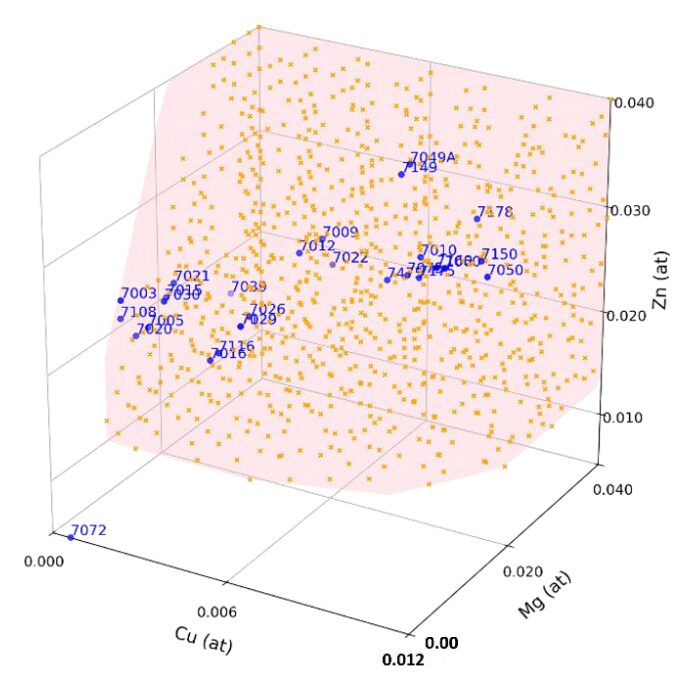
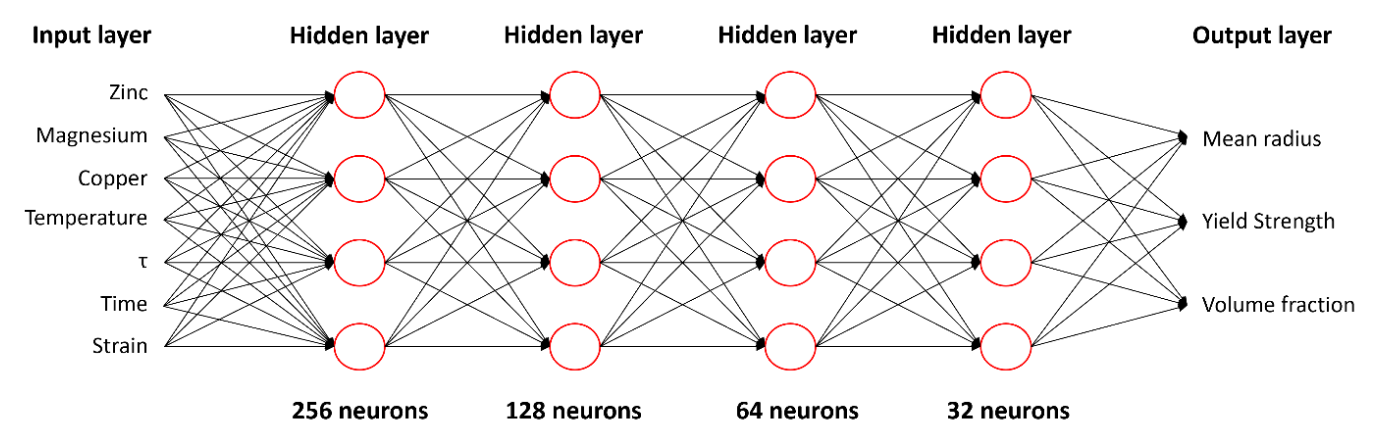
The resulting database comprised 1.5 million simulated conditions and required 35 days of computation using 40 PCs. This dataset provides a broad coverage of the selected compositional and processing domain and forms the basis for training the ML model. The latter is a feed-forward neural network with four hidden layers (see Figure 7). Its inputs comprise the alloy composition, the second stage aging parameters and the pre-deformation strain. Its outputs are the mean precipitate radius, precipitate volume fraction and yield strength. The network is trained to reproduce the corresponding physical-model predictions, thereby retaining the relationship between composition, processing history, precipitation and strengthening. This makes it possible to calculate the local microstructural state and associated yield strength σML at each integration point of a full industrial part.
The final distribution of the yield strength is then calculated by combining the contributions of the QFA and the yield strength predicted by the ML model:
σ = σmin + QFA (σML − σmin)
This formulation interpolates between the lower reference strength and the neural-network prediction according to the local quench factor.
4. Application to an industrial component
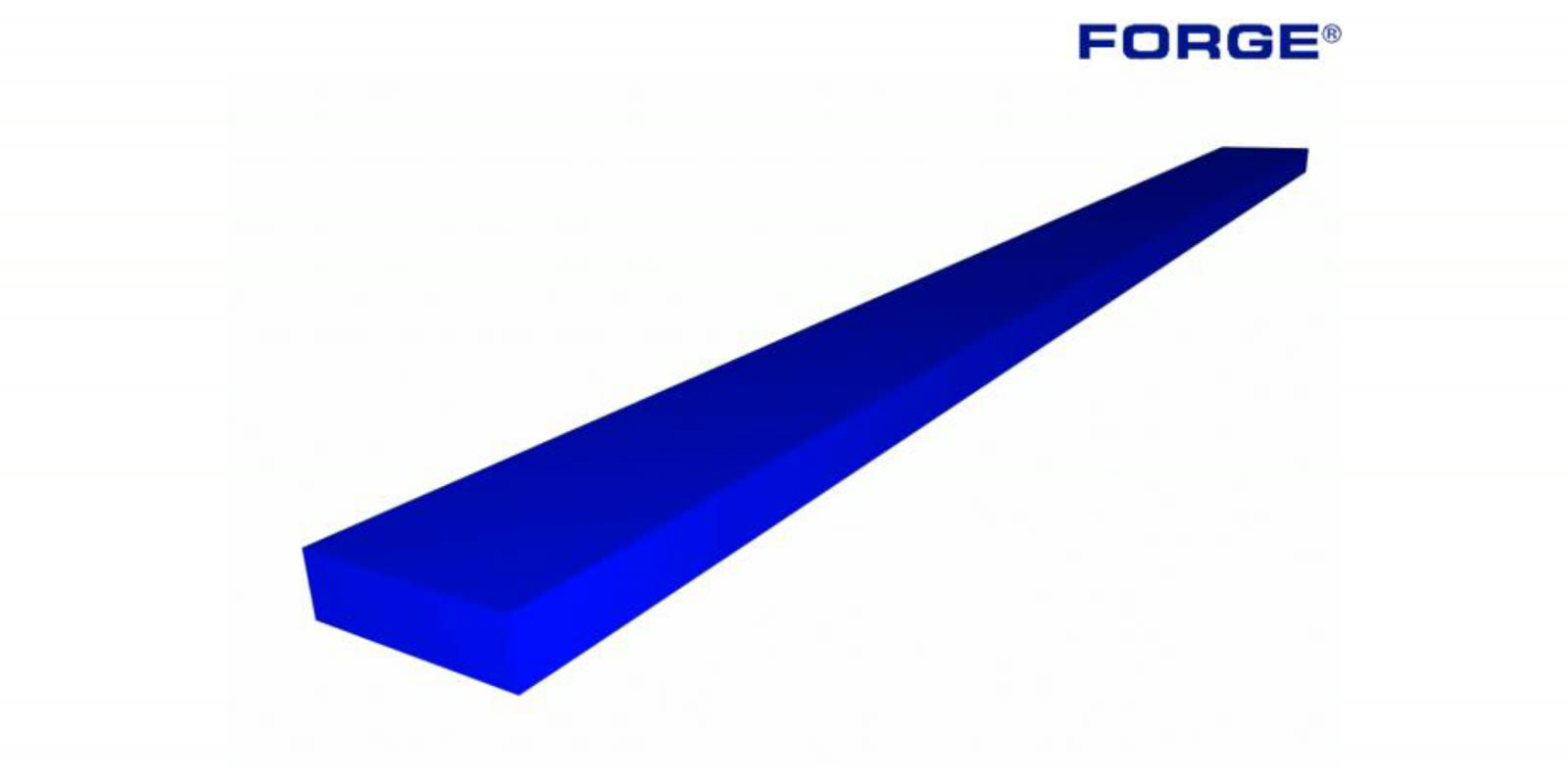
The trained neural network was integrated into the finite element software FORGE® and applied to the heat treatment of a 400 cm x 30 cm x 8.5 cm aluminum 7175 bar. The calculation combines successively quenching, stress relieving and artificial aging, with each stage providing the relevant local state variables for the subsequent step.
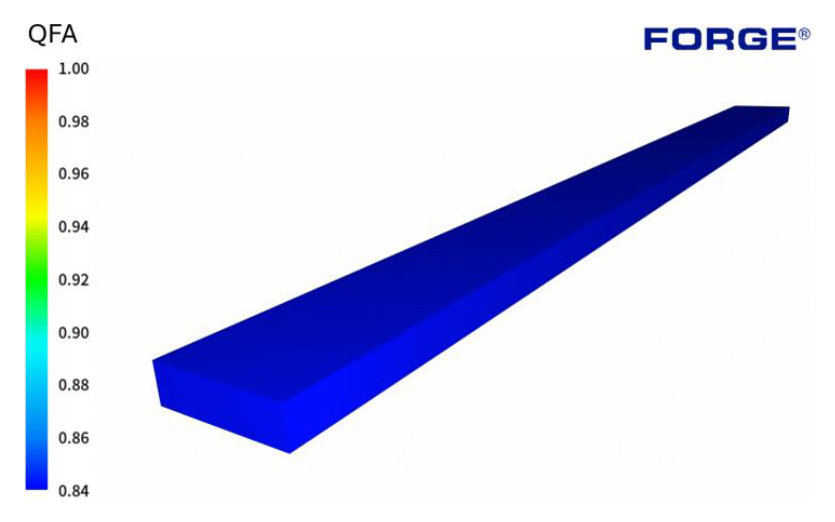
A standard QFA implementation available in FORGE® was used to calculate the spatial distribution of quench efficiency throughout the bar (see Figure 8).
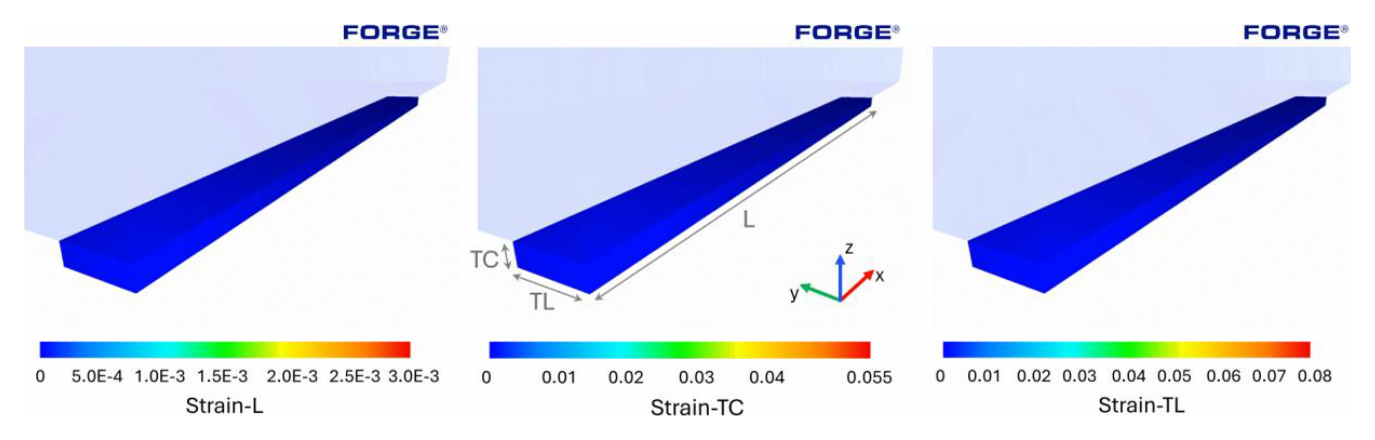
The resulting QFA field was transferred to the stress-relieving simulation, which consisted of uniform compression of the component. The plastic strain tensor was activated to determine the deformation components along the longitudinal direction L of the bar and the two transverse directions, TC and TL (see Figure 9). These local strain fields provide the deformation data required by the artificial-aging model.
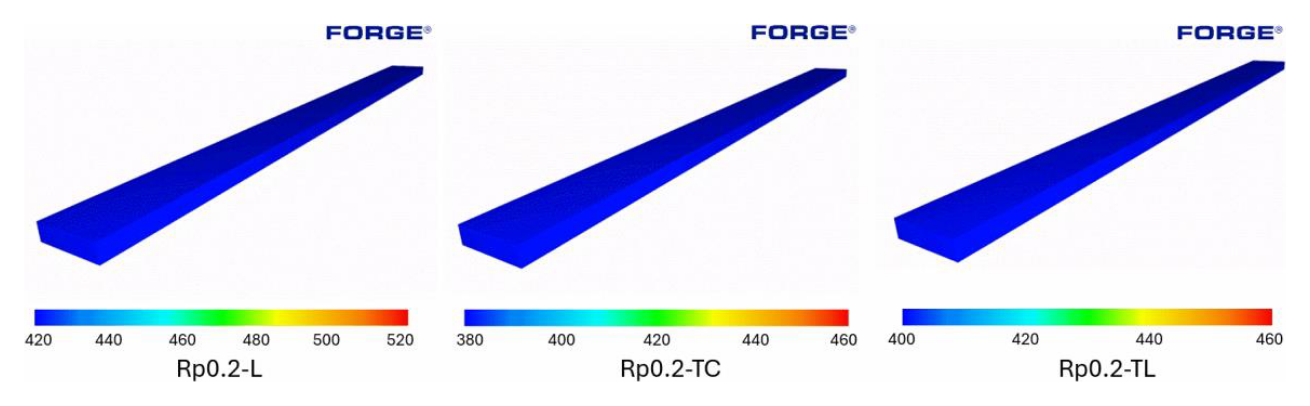
During the final stage, the QFA and plastic strain fields were transferred to the aging computation step, in which the neural-network model is activated. The ML model takes as input the alloy composition (in at%), the second aging plateau parameters as well as pre-deformation data, and computes the yield strength at each point of the part. The simulation results in spatial distributions of the predicted yield strength along the longitudinal and transverse directions of the 7175 bar (see Figure 10).
Conclusion
A hybrid physical and machine learning framework has been developed to predict mechanical properties in 7xxx aluminum alloys across a broad range of compositions and thermomechanical processing conditions. Experimental characterization by SAXS and APT provided the microstructural information required to develop the physical model and highlighted the non-stoichiometric, size-dependent evolution of precipitate composition, and more importantly the progressive Cu enrichment during the second aging plateau. These observations motivated a non-stoichiometric mean-field description of precipitate growth and coarsening, which was calibrated against experimental measurements and used to generate a simulated database covering the selected compositional and processing domain.
Trained on this simulated database, a neural network serves consequently as an efficient surrogate model for predicting precipitate characteristics and yield strength from the alloy composition, second-stage aging parameters, and pre-deformation. Integrated into FORGE®, it enables the prediction of the spatial distribution of yield strength in a full industrial component at a low computational cost.
This approach illustrates how machine learning can extend the practical reach of physics-based modelling by combining a physics-based description of precipitate formation and evolution with the computational efficiency required for industrial-scale simulations. The model is planned for release in the FORGE® Nxt 5.0 version. Future developments will extend the approach to quenching through a multi-alloy model that directly incorporates composition as an input, and to the prediction of electrical conductivity, commonly used in the industry as an indicator of the aging state.
References
- Dursun, T., Soutis, C. (2014). Recent developments in advanced aircraft aluminium alloys. Materials & Design, 56, 862-871.
- Heinz, A., Haszler, A., Keidel, C., Moldenhauer, S., Benedictus, R., Miller, W.S. (2000). Recent development in aluminium alloys for aerospace applications. Materials Science and Engineering A, 280, 102-107.
- Dumont, D., Deschamps, A., Brechet, Y. (2003). On the relationship between microstructure, strength and toughness in AA7050 aluminum alloy. Materials Science and Engineering A, 356, 326-336.
- Deschamps, A., Brechet, Y. (1999). Influence of predeformation and ageing of an Al-Zn-Mg alloy. II. Modeling of precipitation kinetics and yield stress. Acta Materialia, 47, 293-305.
- Marlaud, T., Deschamps, A., Bley, F., Lefebvre, W., Baroux, B. (2010). Evolution of precipitate microstructures during the retrogression and re-ageing heat treatment of an Al-Zn-Mg-Cu alloy. Acta Materialia, 58, 4814-4826.
- Sigli, C. (2006, July). Development of a new 7xxx ageing model. In Materials science forum (Vol. 519, pp. 321-326). Trans Tech Publications Ltd.
- Li, B., Du, Y., Zheng, Z. S., Ye, X. C., Fang, D., Si, X. D., & Wang, Y. Q. (2022). Manipulation of mechanical properties of 7xxx aluminum alloy via a hybrid approach of machine learning and key experiments. Journal of Materials Research and Technology, 19, 2483-2496.
- Pejot, T. (2026). Exploration de l’espace de conception des alliages d’aluminium : vers une approche expérimentale à haut débit couplée à l’utilisation du Machine Learning (Doctoral dissertation, Université Grenoble Alpes).
- Pejot, T., Perrin, T., De Geuser, F., Barlier, J., & Deschamps, A. (2026). High-throughput characterization of the effect of quenching rate and dispersoid type on precipitation kinetics in two Al-Zn-Mg-Cu alloys. Materials & Design, 116579.
- Pejot, T., De Geuser, F., Mouton, I., Barlier, J., & Deschamps, A. Revealing time and size-dependent precipitate composition in an Al-Zn-Mg-Cu alloy using Atom Probe Tomography. Available at SSRN 6409438.
- Staley, J. T. (1987). Quench factor analysis of aluminium alloys. Materials Science and Technology, 3(11), 923-935.
- Staley, J. T. (1969). Prediction of Corrosion of 2024-T4 from Quench Curves and the C-Curve. Alcoa Report, (13-69).